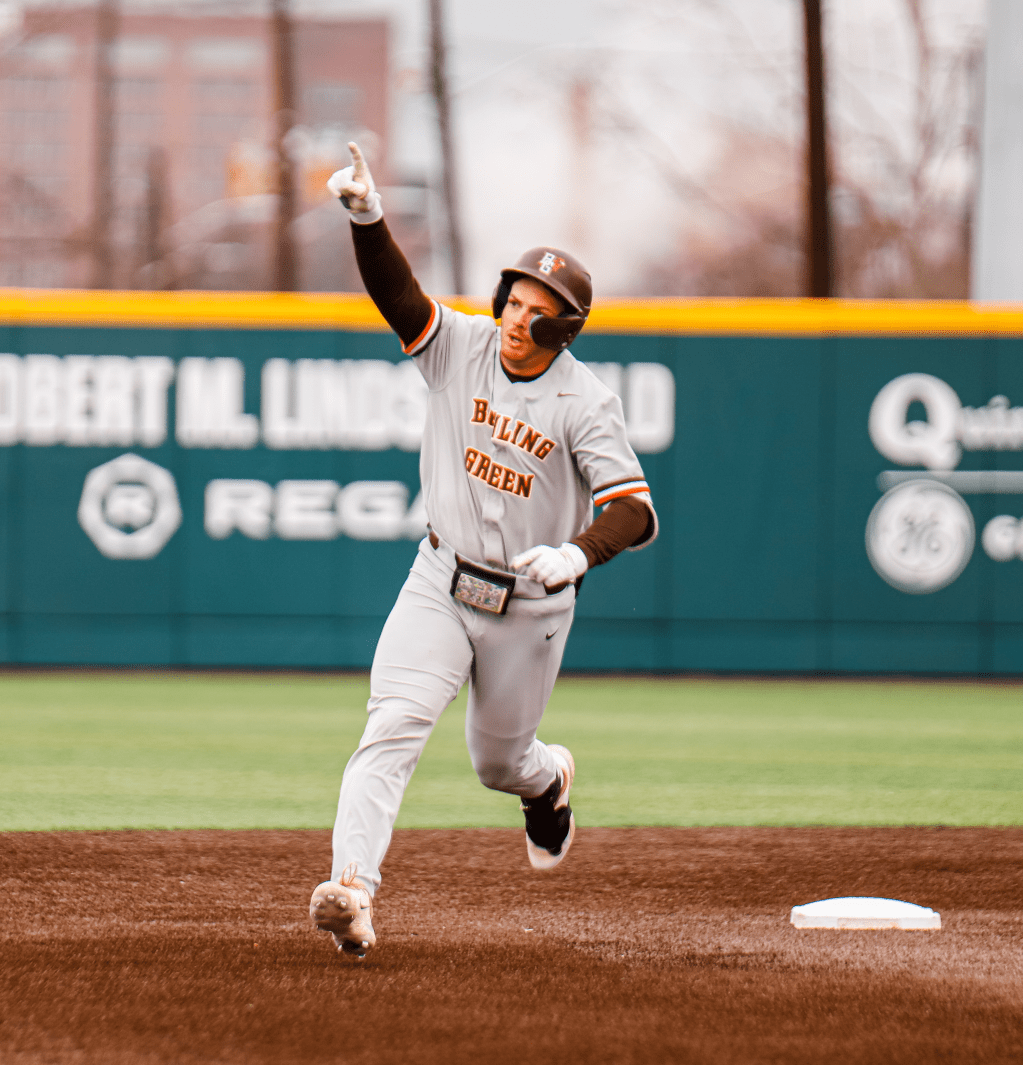
The news hit like a gut punch: Bowling Green’s baseball program, abruptly cut after Tyler Ross’s freshman year. But from that devastating blow emerged an unshakeable motivation.
Four years later, as Ross returned for his fifth season, the termination wasn’t just a memory; it was fuel. He was driven by a singular mission: to rebuild the program from the ashes and leave with a conference championship.
This is how Tyler Ross helped lead Bowling Green baseball’s ultimate comeback.
Multi-Sport High School Athlete
“It was August through early March of hockey, then there was usually a two-week overlap of both sports, and from there it was baseball until the end of July,” Tyler explained, leaving him with little to no rest time.
He shared, “There definitely are times when late in the summer you’re lying on the couch and you’re like, ‘I’m just so tired’, but also knowing like, ‘Hey, go shoot 100 pucks. Go shoot 200 pucks. If you can’t, then go on a little run.’ Just trying to ramp up but being smart about it too. The biggest thing in high school was finding the line of overdoing it and underdoing it.”
The two sports didn’t just cross over with schedules, but also with athletic traits and movements. Tyler said, “For hockey, you’re just so coordinated . . . balance-wise, and in baseball more times than not, you’re trying to do the work to get a balanced swing or always trying to be in a balanced position.” He added, “It was weird because hockey and baseball kind of don’t go together. Hockey for a shot, you’re kind of working through stuff, and in baseball, you’re trying to stay back and balanced.”
However, Tyler explained how he turned this collision into an advantage. Although hockey shots and baseball swings are different processes involving different leg and hand movements, understanding their different movements helped him quickly make adjustments when he was struggling. Coaches were able to use “different lingo” with him and help him see where his hockey and baseball movements were colliding.
The overlap of hockey and baseball ended up giving Tyler an edge when getting recruited by Bowling Green, “Finding that kind of way to make baseball a little bit of a faster pace more like hockey gave more of an edge, and that was one of the biggest things that BG recruited on. . . thinking back, we had very few guys that were baseball specific.”
Tyler’s baseball recruitment to BGSU was unconventional and unexpected. Tyler actually leaned towards hockey over baseball in high school, until the unfortunate part of sports occurred, and Tyler tore his knee in his junior year of high school.
He recalled, “That was the biggest season of recruiting for hockey for juniors and stuff like that. At that time, I was kinda focused on hockey, so that was the biggest gut punch being like, ‘I’m going to miss out on all of this.’”
Tyler fought through the injury and stayed around the guys throughout, even finding ways to help on the bench. His mindset for recovery was to recover in time for summer baseball, aligning with the timetable they gave him from the beginning.
His mentality going into summer baseball wasn’t even to get recruited. He said, “It was more just being able to play a season. I had to wear the big knee brace, and at that time, I knew I was going to have to play hockey in it too, so I was like, ‘Alright, let’s just get back. Let’s just play.’”
But being on a new team for the summer and a team full of players wanting to get recruited to play in college, Tyler stumbled upon the Bowling Green opportunity. He recalled, “Adam Fallon [his teammate] was BG’s main target, and we were on the same team and batted right behind each other. So it ended up working out that they were there to watch him, and I had a really good day. It just kind of went really quick from there . . . I went up there, visited, and committed.”
Playing two sports took year-round dedication and sacrifices. But it led him to his collegiate baseball path.
Tyler’s advice to young athletes passionate about playing two sports and wanting to follow a similar path is simple: (1) plan ahead, and (2) communicate with your coaches.
BGSU Baseball Program gets Cut
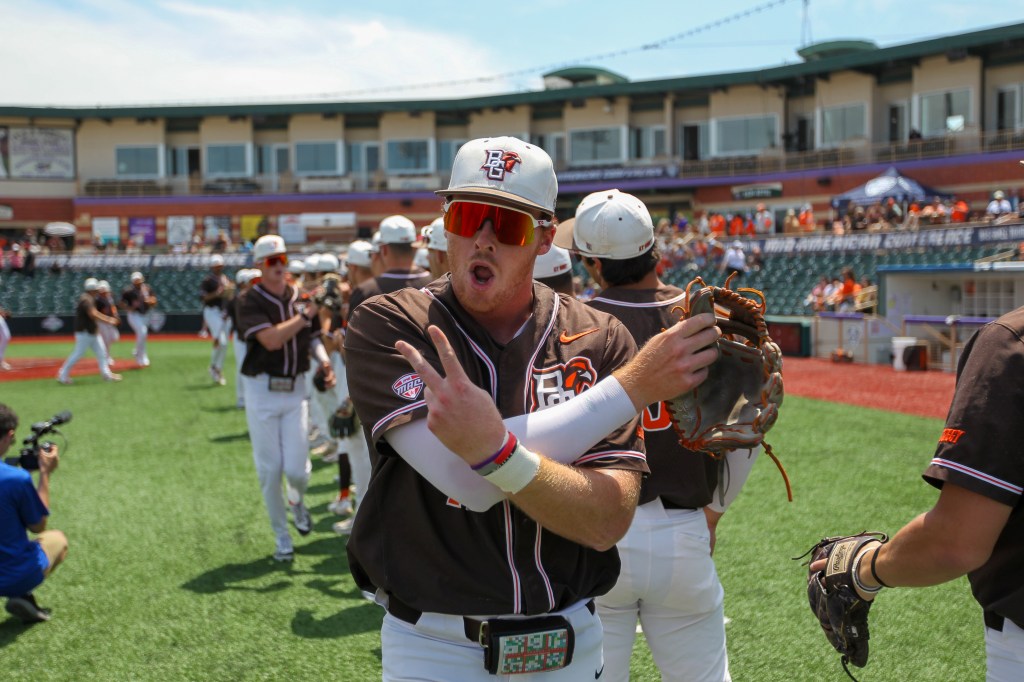
“It was during COVID, so everyone was on their own and we got a 12-hour notice late at night saying, ‘Hey, zoom meeting tomorrow.’ We popped on, then they kinda dropped it on us just like that. And chaos from there,” Tyler recalled regarding the news that the Bowling Green Baseball program was going to be getting cut.
He added, “Then there were rumblings of donors stepping in and bringing us back. Then it was the coaches and some of the key guys having to sell everybody on, ‘Hey, you wanna come back and be a part of this.’ And when I chose to do that, it was under the full intention that by the time we were done, we were gonna be all the way back.”
This was a defining moment in Tyler and his teammates’ journeys. It made their potential impacts that much more important. And it made winning mean even more.
Carving out a Starting Role, Summer Ball, and Facing Adversity
After the program was saved and as Tyler returned his sophomore year, he carved out a starting role on the team. He explained it took an adjustment period his first season.
He admitted, “It was weird for me because it was the first time I’ve ever focused on one sport. That took longer to get adjusted to than I think I planned.” He added that it took an adjustment to tell himself, “You’re committed to one sport now. That’s your full-time training.”
Whereas in his sophomore year, he said, “I was able to get into a routine a lot quicker. I took care of my body a lot better knowing that it was only one sport, and I had the extra time to do that.”
He also expressed how embracing the resources available to athletes helped make the adjustment more comfortable. He said learning to take advantage of the trainers’ knowledge and resources to help, the strength coaches’ abilities to help you get stronger, study assistance, and more, helps you meet more people and grow as an athlete and person.
Tyler mentioned he was “silly to not take advantage” of these resources right away and their ability to help you adjust to collegiate athletics.
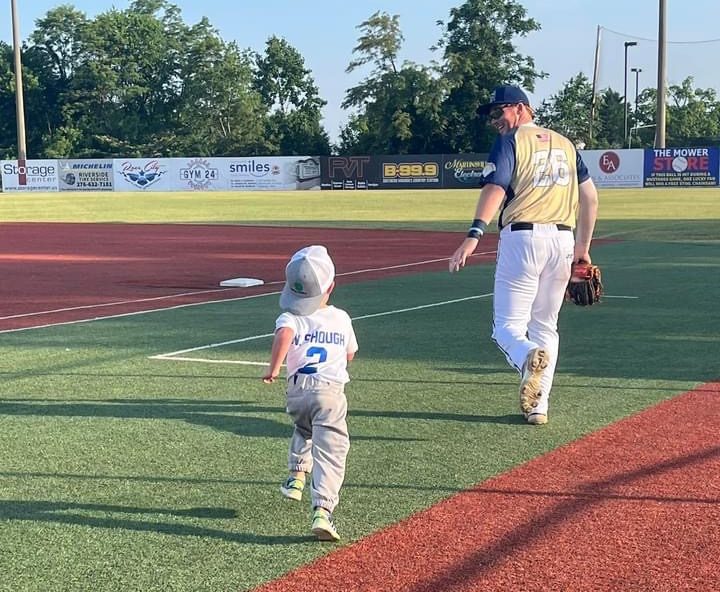
Another opportunity to grow was summer ball. In summer ball, baseball players will stay with a host family in a different city and get to play in a league separate from college.
“You walk in and you’ve only ever met these people through probably a phone call or a FaceTime maybe, and then they’re welcoming you into their home for 2-3 months,” he explained.
Summer ball presents a great opportunity to improve as a player. Tyler said, “You have all day to prepare, and then you get to play for fun at night. . . We always talked at BG about, ‘How much can you change in a good way for when you come back?’ The BG coaches aren’t gonna see you. They may watch a video here and there or check a statline, but all the stuff you do away from that, you can really make a big jump.”
There’s also a massive opportunity to grow as a person. Moving in with another family can be difficult, but Tyler had a challenge for himself, “I always wanted to be talked about as the next guys moved in and stuff like that.” This challenge is a testament to who he is off the field.
He continued, “It’s really cool because more times than not, they’re a little bit smaller towns, and when we go in we’re the team and talk of the town. So, you find yourself in so many different little conversations. Whether it’s warmups, if you go grab lunch at the diner, or kids camp.”
Tyler’s advice to young guys going into summer ball is straightforward: “You’re gonna find you get way more out of it the more you put into it.”
Another challenge baseball offers, regardless of the season, is dealing with slumps. Tyler expressed:
“In baseball, you’re gonna fail, so it’s just trying to find ways that every game you know you’re impacting it somehow. . . When slumps happen, every baseball player knows sometimes you’re going to hit balls you think should land or hit balls right at people, and it’s like, ‘I just can’t buy it right now.’ But the best thing that I learned was, ‘You are literally one at bat away, and then you don’t know from there how hot you can get.’”
Whether it’s welcoming resources, embracing summer ball, or keeping a positive mindset during slumps. Tyler’s experience is a blueprint for improvement.
The Fifth and Final Year
Tyler explained the fuel behind his final year, “We had made progress as a team, but we hadn’t made that full jump. So coming back for my last year, my biggest goal was, ‘Fully turn it around.’ When I was recruited way back when, it was like, ‘Hey, you’re the class that needs to turn this program around.’”
Further, he said, “We always talked about how the program had gone through a little bit of a slump. There hadn’t been many winning seasons in a long time (around 10 years). There hadn’t been a championship in a long time. Can we finally do everything more than what we thought to separate ourselves?”
They wanted that conference championship, and especially Tyler and his two teammates that rode out their fifth years alongside him. And 4 years and 2 days after the program was cut, Tyler and his teammates delivered on their goal, winning the MAC.
In Tyler’s final season, he executed a season including: Second-Team All-Conference honors, two Conference Player-of-the-Week awards, a .331 batting average, a .563 slugger percentage, and a number of career highs.
He concluded, “It was our goal to win a championship, and we did it in my fifth and last year. That’s the full circle moment. We won the championship on May 17th, and we got cut on May 15th, 4 years earlier. I tweeted, ‘4 years and 2 days later who would’ve thought this is possible.’ I went back and found the exact tweet. It was so much of a driving force, and last year, after we kind of got off to the hot start, it was the emphasis of, ‘You guys have done everything right, put it across the finish line now.’ That was the full circle moment of us three that were on the call, we went through it all, and then we got to dogpile and get a ring.”
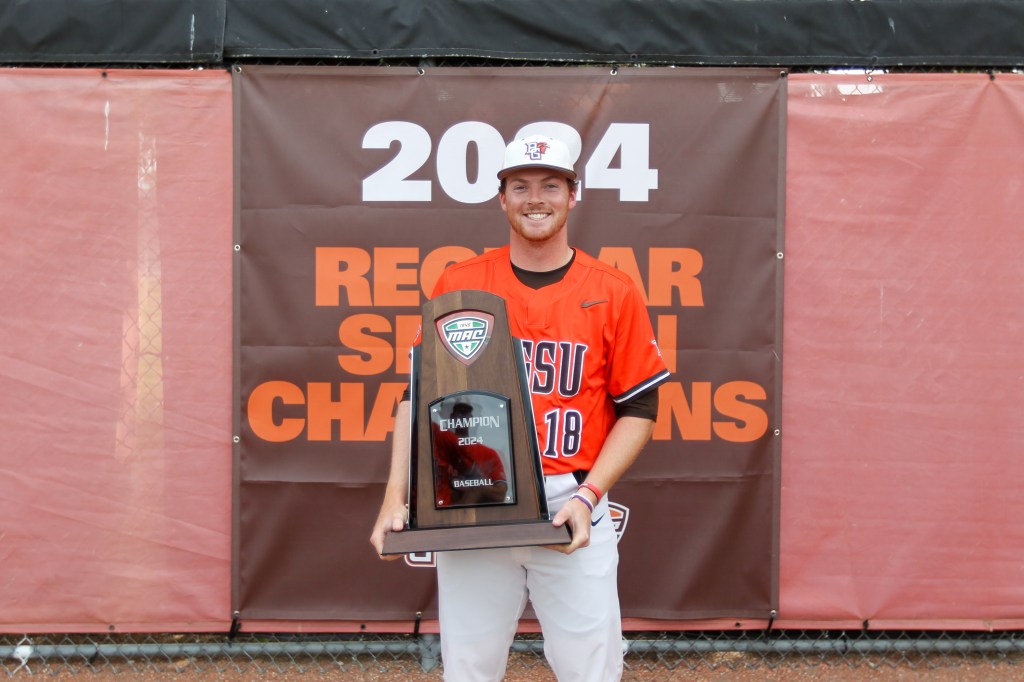
Tyler’s story is a testament to what happens when you battle through the ups and downs. He didn’t just return for a final season, he returned to leave a legacy that can never be erased. Four years after being told he no longer had a team, Tyler helped lead the ultimate comeback.
Tyler is proof that with resilience, grit, and commitment, your journey is never over.

 The Players’ Corner
Leave a comment