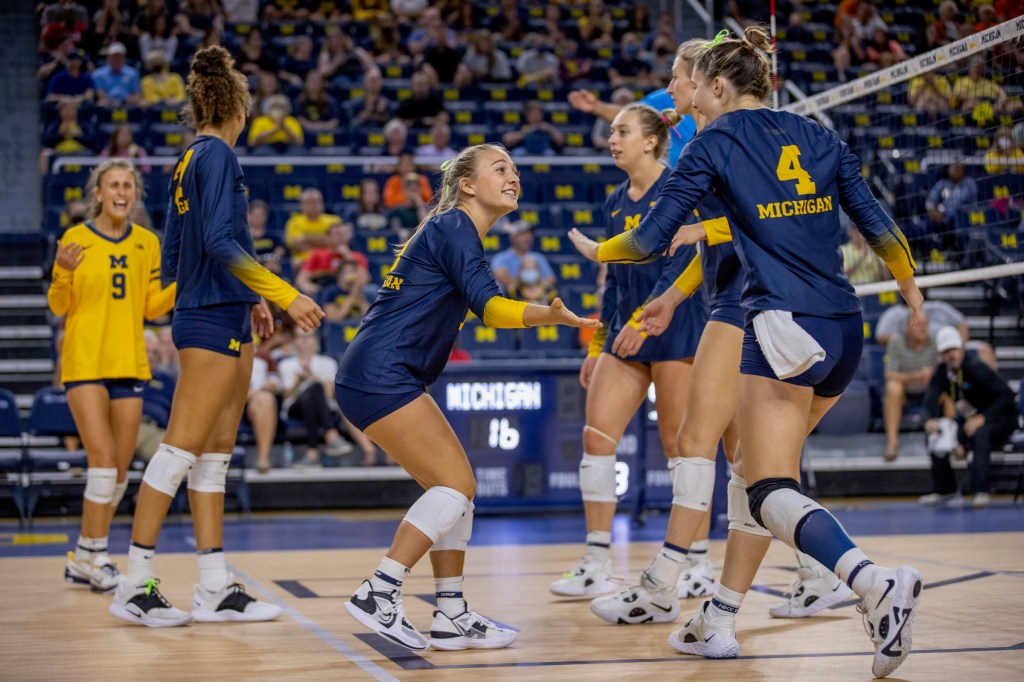
As a two-time conference player-of-the-year and former national champion, Amber Beals was used to intensity and pressure when she got to Michigan as a freshman. But the journey from high school star to collegiate leader encompassed pivots in finding her role and adjusting her mental approach.
Amber’s path reveals lessons that are a model for success, from adapting to make valuable contributions to a team, to overcoming mistakes, to being a leader.
Intrinsic Motivation
Come senior year of high school, some athletes find themselves burnt out and enjoying their sport less. For Amber, this was never a problem, even playing at the highest level on a national champion club team, “There was never really a point of burnout for me. I loved every second of playing, and I just thought it was fun to compete, especially at the club level playing at such a high level.”
She actually found committing early on in high school even improved her motivation, “I committed to Michigan in February of my sophomore year…I think committing early almost gave me more motivation to stay locked in on volleyball and training, and and an end goal which was reaching the college level.”
Committing early wasn’t Amber’s only motivation, as a comment from a coach stuck with her from 8th grade. The coach told her that because of her shorter height, a certain mid-major school would be a good fit for her. But this moment just gave her a chip on her shoulder, and she certainly proved the coach wrong.
Amber’s discipline stemmed beyond the court. Off the court, she dedicated herself to academics, “It was just a non-negotiable for me. I wanted to be the best version of myself and that meant showing up in the classroom.”
A benefit of being at Michigan was that her teammates and coaches had similar beliefs, “If you got recruited to Michigan, you probably care about academics… It was also something that was really emphasized by our coaching staff…Often we would lift in the morning, go to classes during the day, probably study before practice, have a 3:00 pm-6:00 pm practice, grab a meal, then go study again. I think it just became a routine for a lot of my teammates and me…you have to be super diligent about how you’re using your time.”
Amber built her motivation on a blend of internal motivations that drove her to success on the big stage. The combination of a true love for the game, a competitive chip on her shoulder, and a non-negotiable commitment to herself drove her from national champion to the college level.

Redefining your Role
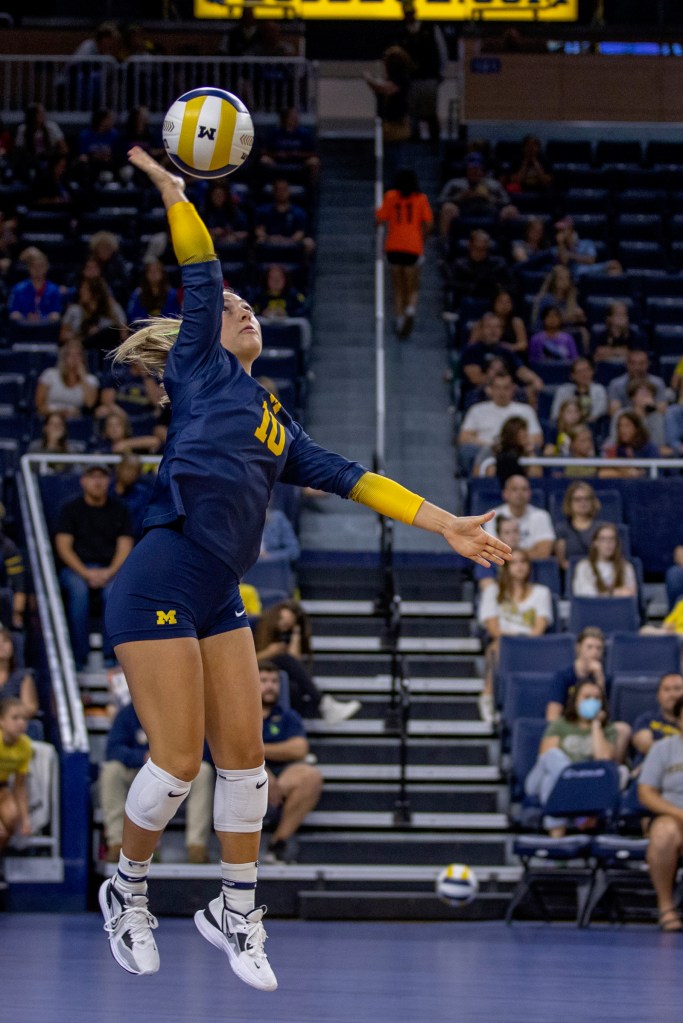
Before making the jump into college, Amber was the star of the show. Joining a Big-10 program in college, she had to redefine her role on the team to maximize her impact.
She explained the adjustment, “You go from a player that was probably the best on your team or best in your area, and then you join a team that has girls – there were girls that were 5 years older than me and very elite athletes playing at the Olympic level.”
Her strategy for adjusting meant embracing a new role, “I think it just goes from you knowing your place on your team to having to find a new role and your place on a new team.”
This new role meant enjoying any time on the court, even practice, “The way I approached it is, ‘I need to figure out how I can contribute to this team even if I’m not on the court.’ I ended up loving practices. I thought practices were so fun…At least my first two years when I didn’t have a ton of playing time. The time that I got on the court was during practice, so I wanted to enjoy that.”
She added, “We would do drills, and I would just try to make games for myself and try to make perfect passes. Or we would get into scrimmages, and it would be the starters versus the bench players. During those games, we just wanted to beat the starters. We just tried to have fun with it while also performing.”
In a situation where she could have chosen negativity, Amber put a positive spin on it, “Just giving all your effort is all you can really do in those situations, I think finding your role, whether it’s on the court or off the court, there are always ways to contribute to the team.”
With this outlook, it’s no wonder she was named captain her senior year at Michigan. Her leadership style started with herself, “I think the biggest thing for me, leadership-wise, was leading by myself: showing up every day, performing at a high level, holding myself at a high level, and always doing the right thing.”
She found a way to contribute regardless of the situation, even if it meant a greater focus on contributing off the court and as a leader. She embraced her time on the court to grow as a player and found joy in practices.
It’s this attitude that helped her make the jump in her junior and senior seasons, leading to games like when she recorded 12 digs at Minnesota her junior year and helped lead the team to victory over Northwestern with 9 digs and a kill as a senior. She ended her time at Michigan with her best season, tallying 22 games of play, 59 sets, and 86 digs.
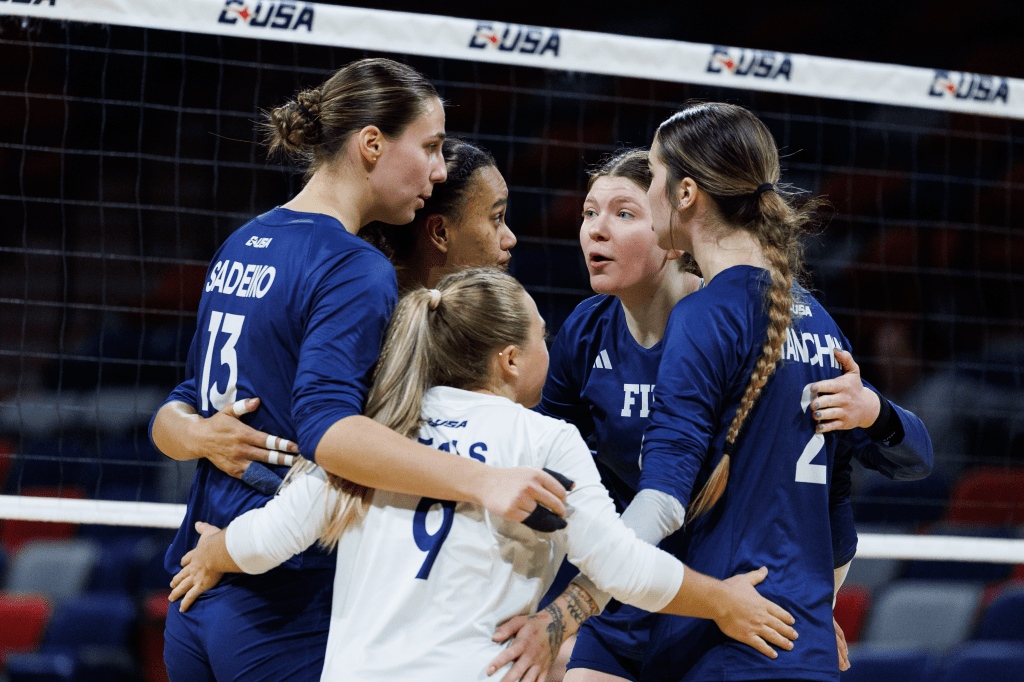
Transferring to FIU, Amber got to take on a bigger role. One of her driving factors in the decision of where to play was the opportunity for more playing time. While she was an integral player on the team, playing in 32 games and 116 sets, to her surprise, the environment wasn’t any more laid back than playing in the Big-10. She quickly learned “that college volleyball is college volleyball no matter where you’re playing.”
This meant there was still pressure to perform, but Amber welcomed that, “I knew I needed to show up every match and bring leadership…I still had that pressure on me to perform, especially being in a big role where you’re on the court the whole time, there are definitely high expectations.”
Amber’s approach to adjusting to the college level is a blueprint for any young athlete. Whether it was embracing time on the court in practice, taking on a leadership role off the court, or playing the whole match, Amber adapted to her role.
Maturing as a Player
For Amber, some of her biggest improvements didn’t come in physical forms; they happened between her ears.
She quickly realized that recovery is a “huge part of the game.” Like many high school athletes, Amber said, “When I was in high school, maybe I stretched… But for the most part recovery wasn’t something I cared about.”
In college, this process changed, as coaches and trainers emphasized going to the training room and making recovery a part of the routine. As she explained, “We’re all putting a lot of stress on our bodies, so that was something that was definitely a big emphasis at the college level and just became a part of everyone’s routine.”
Just as learning the importance of recovery, Amber’s mental approach on the court evolved as well. One of the essential parts of Amber’s maturation process as a player was learning that “volleyball is a game of mistakes.”
She admitted:
I think something that held me back for a really long time – at least at the college level – was struggling with mistakes and letting mistakes get to me. If you look at volleyball, it’s a game about making mistakes… I had a lot of conversations with my coaches like, ‘You just need to play. You’re holding yourself back.’ So I think that’s one thing I do kick myself about, I’m like, ‘Why did I do that?’ But I think that’s definitely something for other people to remind themselves about. That’s the sport. You’re going to make mistakes. One mistake is not bigger than the other. Just moving past it and performing the next play.
Through her collegiate journey, growth came in ways extending beyond improvements in the weight room and in physical skills.
Now, this approach helps Amber navigate her career, as one of the biggest translations from collegiate volleyball is “having a pretty even mindset that stress during work is normal and not letting certain situations during work stress you out or make you think a different way.”
Her journey is a testament that sometimes the greatest lessons in sports transcend the court, providing an approach that is a model for young athletes to embrace.

Amber built her collegiate success on persistent motivation fueled by a love for the game, a willingness to adapt to any situation, and learning to move past mistakes. Her story isn’t about collegiate volleyball; it’s about character. Her character is the spotlight of her stories, and is the ultimate key to her continued success.


 The Players’ Corner
Leave a comment