
At an early age, Andrew Shaffer learned a pivotal lesson: success in soccer isn’t just about what you do on the field. It’s about what you do when no one is watching.
As a left-wing back, his position demands extreme conditioning and effort. His journey from an all-state high school player to a Division I captain and semi-pro star evidences the compounding effect of extra hours of training, taking care of his body, and mental strength through adversity.
This article highlights Andrew’s path, providing a masterclass for young athletes chasing success.
The Foundation: Columbus Crew Academy and CUP
Andrew’s professional approach to the game isn’t something new. It’s been a foundation for him since he was a kid playing for his hometown academy team.
Academy is unlike other youth soccer environments, as Andrew said, it’s “probably the most professional environment you can be in as a youth player.”
The experience taught him what it takes to be a pro, as he explained, “I’ve always put a really big emphasis on things like sleep, eating, and recovery. I was exposed to it at a young age. When we were at the [Columbus] Crew, they were telling us about it and showing us how to be a pro, and that’s probably one thing that has been an advantage for me over other people since I was in high school.”
Later in high school, Andrew was making the drive 2 hours from Columbus to Cincinnati to play for Cincinnati United Premier, an elite club team in Ohio. He explained how playing on a team with double-digit Division I commits helped him, “I was fortunate to be on a very good club team, and we had a very good club coach, Adam Jones, who got me connected with quite a few schools… It prepared me the best it could for going to a Division I school. It got me a couple of Division I offers.”
Following an all-state junior season in high school, Andrew committed to play Division I college soccer at Bowling Green State University. He was feeling like he was “on top of the world at the time,” but at this height, he faced a setback just before he transitioned to college.

The College Jump: Overcoming Adversity to Make an Impact
The adjustment to collegiate sports is already difficult, but when you’re coming back from an injury just two months before reporting to camp, it only exaggerates that difficulty.
Andrew admitted it was a mental battle at first, “When I was coming back, it was only probably two months before I was going to report to BG. So I was not fit, not confident, and really not playing well. I wasn’t even starting on my cup team, and so you think, ‘How are you going to go get minutes on a Division I team when you’re not starting for your club team?’”
But he fought off the battle with patience and extra training. It even shifted his perspective, “Almost right before I got to school, I got very fit finally, and then something just clicked. I started playing really well when I got to preseason at BG, and then going through that adversity helped realize when I got to school as a freshman that if I’m not playing right away, it’s alright.”
However, this new perspective and heightened appreciation for the game didn’t stop him from becoming an impact player as a freshman. With the help of his assistant coach at the time, Nate Kopunek (current head coach at Detroit Mercy), he put in many extra training sessions, which rebuilt his confidence. He shared, “My touch just got really sharp, and my shooting and passing got really sharp. Then, when I got into the trainings with the guys, I had a lot more confidence because nothing was unfamiliar to me, and then it carried over to the games.”
This effort led to Andrew playing in over half the minutes of games down the stretch and scoring some big goals. When adversity hit, he flipped the switch and used it as an opportunity to mature.
The Growing Role: Proving his Value to the Starting Lineup
After a Freshman season where he made some big contributions to the team down the stretch, the next jump was to make it into the starting lineup.
Heading into his sophomore season, he made the jump and was a part of the starting lineup in preseason, but then got dropped in the first game of the regular season.
Instead of letting it affect his play negatively, he viewed it as “just a little bit of adversity” and understood that “the coach ultimately has the decision on the lineup.” Andrew explained that over time, he’s learned:
“The coaches are picking the guys that they feel are going to help them win the game. So if he’s not picking me, I try not to make it personal and just understand right now, even though I might disagree, he doesn’t believe that I need to be on the field the whole time for us to win the game. So basically my job and what I felt like to myself was, ‘I just need to go convince him.’”
Going into the game, having to come off the bench, Andrew had a chip on his shoulder. When he came into the game, Bowling Green was down 2-1 to Cleveland State, but not for long. In just 38 minutes of play, he came into the game and evened out the score at 2-2 before scoring his favorite goal at Bowling Green — a snipe to the right upper corner of the net, putting his team ahead and securing the win.
Just two games later, he was back in the starting lineup and hasn’t left it since.
He didn’t blame his coaches; instead, he decided to take it upon himself to make an impact they couldn’t ignore. It’s a lesson he thinks is at the forefront of success in collegiate soccer, “I think the people in college soccer that can persevere through the years when things aren’t going well are the most successful ones. I think my mental strength has grown a lot over the years, and that’s probably why I’ve been able to be successful. Because when things have gone wrong, I’ve just kept going and not gotten crazy. I just kept training.”
Playing in Des Moines, Iowa: The “Summer of Soccer”
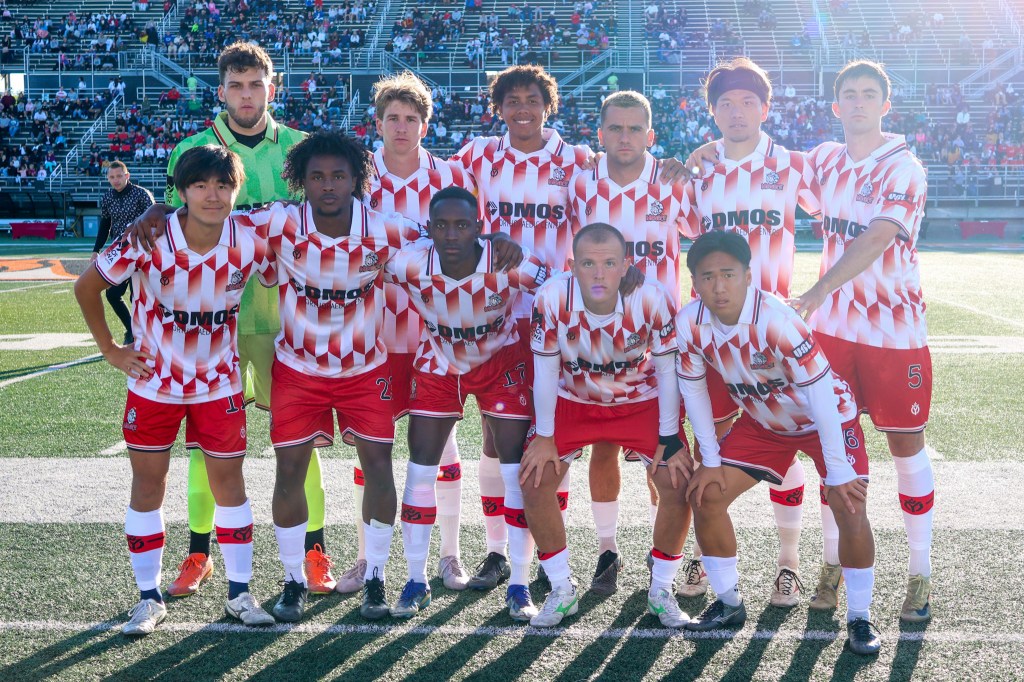
The momentum from his sophomore season continued into a huge junior year, where Andrew started every game, averaged 81.2 minutes, and led the team in assists. This massive impact put him on the radar of Charlie Latshaw III and the Des Moines Menace, a top USL II semi-professional team, leading to the “summer of soccer.”
Playing for the Menace this past summer is an experience he can’t say enough great things about. Out there, it was all about soccer, and it only increased his hunger.
Andrew explained Latshaw is a “phenomenal recruiter” and did an amazing job putting together the team. He didn’t just pull guys from top college teams, “A lot of people out there were like me. They were from mid-major schools. They were excelling and really hungry to get to the pros.”
This environment led to a lot of conversations amongst the squad about ambitions to play at the next level, “The conversations out there were different. Everybody wanted to be a professional, so the conversations were about who’s going on these trials and who’s been where. We had guys going in and out of trials all summer… There was a lot of positive peer pressure on how we’re taking care of ourselves. Seeing a guy go off to a trial is pretty inspiring and you’re like, ‘I want to be up next.’”
Competing against such a high level daily and starting at left back for a team ranked at the top of USL II for a large portion of the season helped Andrew grow. He expressed that he “really gained a lot of confidence” and realized that he could “not only play with these guys but excel.”
It even led to a massive opportunity to be a part of an MLS team combine and put him on a trajectory to hopefully make his biggest impact yet, entering his senior season at Bowling Green.
His Upcoming Senior Season: Impacting the Team as a Captain
As Andrew enters his final season with Bowling Green as a captain, he’s hoping to make “a huge impact.”
He shouted out the former leadership he’s had at Bowling Green, and is looking to continue building on that culture. To continue the build, it started with learning.
He capitalized on having elite teammates and leaders around him in Des Moines, as he explained, “I went to Des Moines this summer, and I spoke with a lot of really high-level leaders — people who have been captains of conference champion teams in Division I; people who have played at top-level programs. I was picking their brains the whole summer about how they’re running their programs; what kind of things the captains are doing and saying.”
Now it’s on him to bring those lessons to the team, as he added, “I’ve already tried to implement some of that stuff and just reinforce our standards we have here. My impact here is I want to be really sharp on the standards that we have and make sure that we are not slipping at any point and accepting anything other than championship-level training, championship-level behavior off the field, etc.”
Building a Platform: Impacting an Audience Beyond his Team
Andrew’s impact extends past his locker room. What started as a random idea in his family room with his brothers has turned into a platform where Andrew is making an impact on the younger generation of athletes.
He embraced being a modern-day athlete and made an Instagram page sharing his soccer journey. But it didn’t come without some hurdles, “I started doing it, and of course anytime you start doing something a little bit different, everyone is always quick to judge and bring you back to being normal like everyone else. It’s funny, I used to do interviews a lot on the page, and I used to have a hard time finding people to get interviewed. Now people are asking me to get interviewed for the page.”
Now the page has over 7,000 followers and consistently gets eyes on his highlights. But one of his favorite parts is the impact it’s allowing him to have on younger players, “A lot of random kids will DM me and text me and ask for advice about how to get to college, and no one really sees it, but I love responding to those and helping these kids if I can.”
Going outside of the norm not only allows his play to be seen by more people, but it’s also expanding his impact on other athletes.

Chasing a Dream: His Professional Ambitions
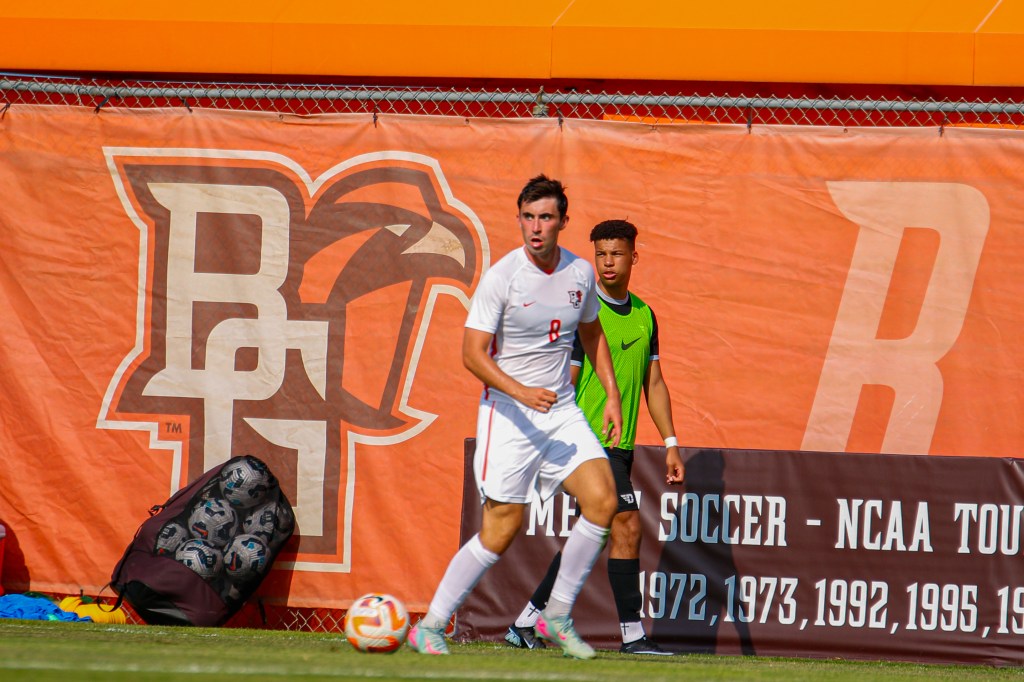
Although Andrew’s last season at Bowling Green is on its way, come late fall, it won’t be the last time he steps onto the pitch.
Everything he’s done up until now — caring about the little habits at a young age, persevering through adversity, extra hours on the training grounds, and sacrificing summers to focus on soccer — has been in chase of one dream: to play professional soccer.
Andrew expressed, “What motivates me? It’s just been my dream since I was a little kid… I really just want to fulfill my childhood dream.”
Andrew Shaffer’s journey has been a marathon of small, intentional steps. Each extra hour of training, each summer spent competing at the highest level, and each act of leadership has laid another brick in his road to the top. As he looks to the future, it’s clear that the outcome will be a result of the person he has spent his entire career building—a player strengthened by hardship and driven by the pursuit of a childhood dream.


 The Players’ Corner
Leave a comment